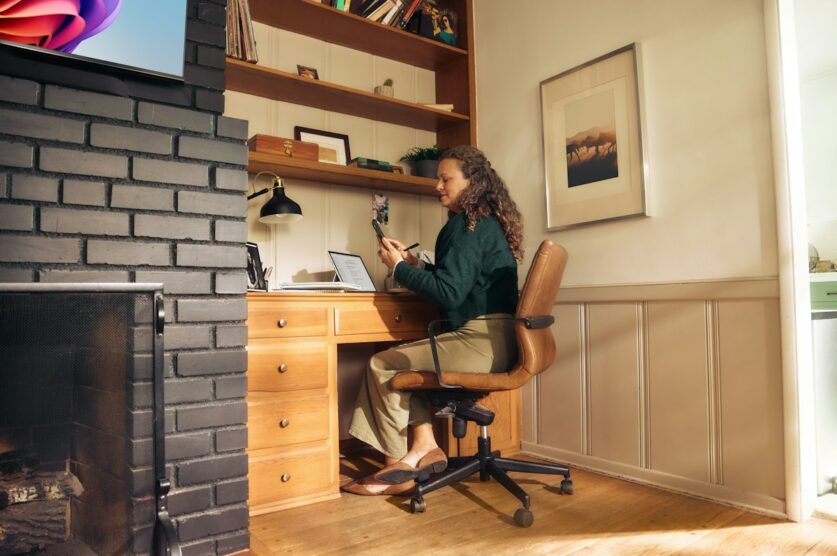
An article in the magazine Cariere (no. 250, September 2018, page 6) showed that, at that time, "at least 4 days a month Romanian employees work outside the office": almost 50% of them choose to work from home, and 20% prefer cafes or business lounges.
The phenomenon is called "teleworking" (in Romanian, "telemuncă" or "telelucru"; the prefix "tele-" indicates that work is done remotely, through electronic means of communication). It appeared in the US in the late 80s and expanded with the development of telecommunications, and after the 2020 pandemic it became a common practice in many companies.
The advantages of teleworking for the company and the employee
For the employer, the great advantage of teleworking is primarily economic: the costs of renting, equipping and maintaining offices are significantly reduced. For the employee, the main advantage is flexibility: he no longer wastes time traveling to the office, and working hours can, in principle, be within the range that suits him.
Why remote employees become demotivated
And yet, the main risk of teleworking is that the remote employee feels "disconnected", isolated, and disconnected from the team. A study published in the Harvard Business Review in 2017 , on a sample of over 1.100 employees, showed that those who work remotely feel ignored and left out more often than their colleagues in the office, which leads to demotivation. Specifically, remote employees end up feeling demotivated due to the following aspects:
communication with the team is deficient or insufficient, especially when details need to be clarified that would normally be discussed face to face; the misunderstandings or even conflicts that arise in this way are frustrating;
there is a lack of informal contact with colleagues, through which quick corrections or adjustments are often made at the office, "on the fly", and the delays that occur because of this give the feeling of being "left behind";
the connection with the office dynamics is weak, so the employee may miss out on promotion opportunities and may feel stagnant, stuck in a "dead line".
Photo: Unsplash
How to prevent demotivation: checklist for managers and HR
To prevent remote employee demotivation, magazines and specialized websites propose several behaviors and actions. By adopting them, the direct manager or HR specialist who deals with remote employees can maintain the trust, connection, and sense of common purpose, so necessary for motivation. Here are some of them:
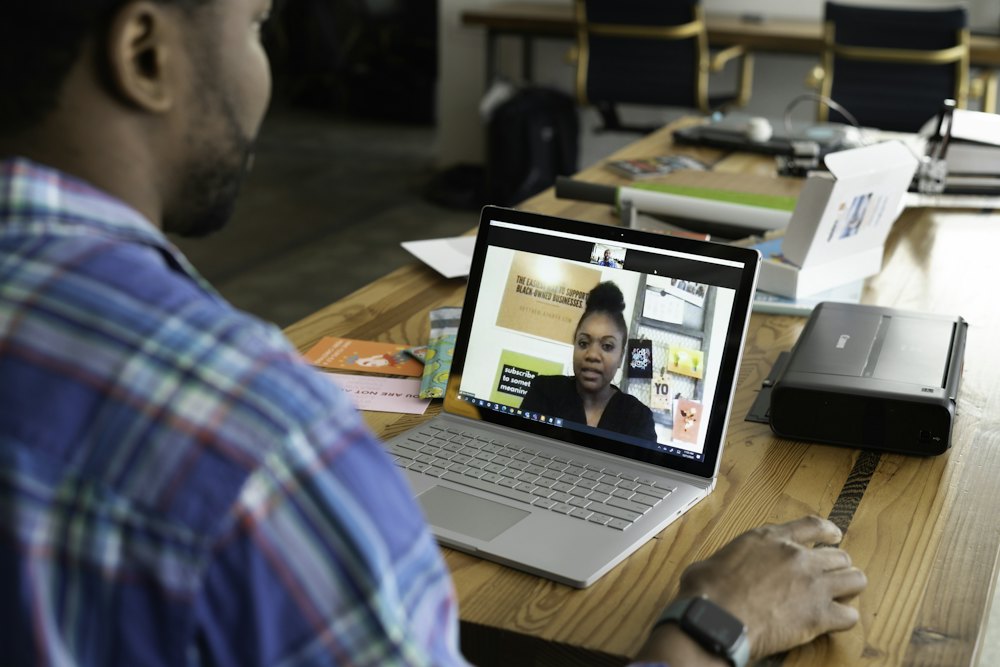
the manager has direct and regular contact (weekly or monthly) with the remote employee, face to face or via video conference, so that he or she feels part of the company culture and remains involved in the long term;
the manager is interested in the employee's workload and the status of their projects, listens carefully and, in turn, shares office news with them, so that the employee feels informed, involved and kept up to date;
the manager uses multiple means of communication (telephone, email, videoconference, Teams, Zoom, Slack, WhatsApp, etc.), chooses the one preferred by the employee and, as far as possible, is available during the hours suitable for the employee;
the manager is interested in the remote employee's working space and conditions and provides them with the means to improve them (for example, an ergonomic chair or workplace layout);
The manager socializes with the employee, takes an interest in their life outside the office, their family, or their hobbies, to strengthen the relationship and make them feel important to the team and the company.
Conclusion
As difficult as it may seem to find the key to motivating a remote employee, especially since everyone has their own profile and is motivated by different things, the effort is worth it. Teleworking has become one of the common ways of working in the 21st century, and distributed teams need clear communication and real connections between people.
In teams working remotely, many misunderstandings start from emails and online meetings, often in English. International House Bucharest organizes English courses for companies in blended format, with the IH learning platform, and modules such as Effective Business Meetings (BizMeet) or Business Writing Skills, starting from an analysis of the team's needs. If you don't know where to start, the language audit shows the real level of each employee.
Quality guaranteed by global standards in foreign language teaching.
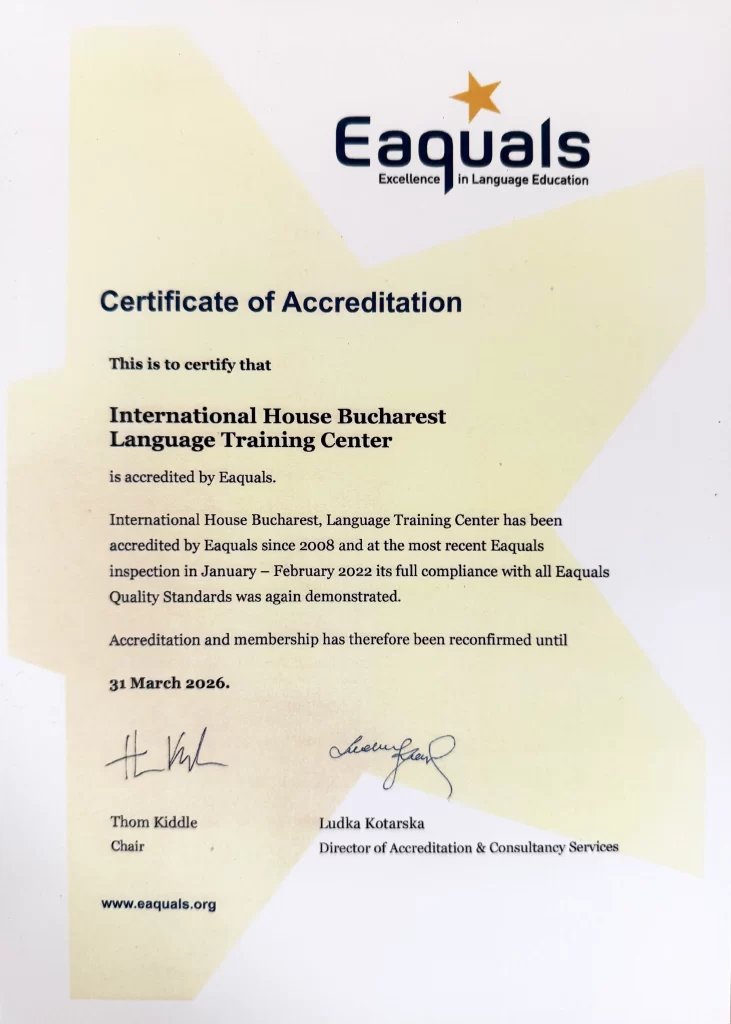
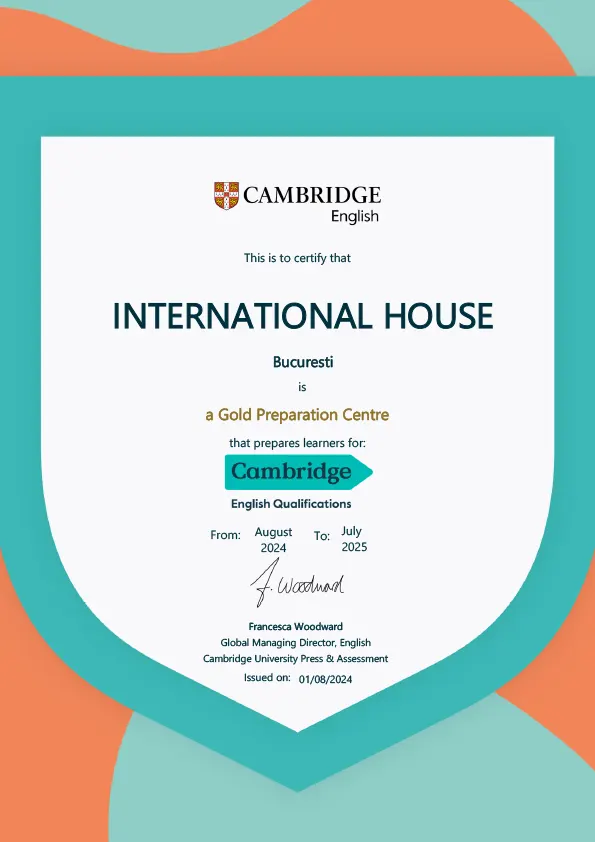
International House Bucharest is accredited by EAQUALS – Excellence in Language Education, part of the global network International House World Organisation and a Cambridge teacher training centre (CELTA & DELTA). We are ISO 9001 and ISO 27001 certified, ensuring quality, security and confidentiality in all our corporate programmes.
Manage consent
To provide the best experience, we use technologies such as cookies to store and/or access device information. Consent to these technologies allows us to process data such as browsing behavior or unique IDs on this site. If you do not give your consent or withdraw your given consent it may have negative effects on certain functionalities and functions.
function
Always active
Technical storage or access is strictly necessary for the legitimate purpose of enabling the use of a specific service explicitly requested by a subscriber or user or for the sole purpose of executing the transmission of a communication over an electronic communications network.
Preferences
Technical storage or access is necessary for the legitimate purpose of storing preferences that are not requested by the subscriber or user.
Statistics
Technical storage or access that is used exclusively for statistical purposes.Technical storage or access that is used exclusively for anonymous statistical purposes. Without a subpoena, voluntary compliance from your Internet Service Provider, or additional records from a third party, information stored or retrieved solely for this purpose cannot typically be used to identify you.
Marketing
Technical storage or access is necessary to create user profiles to which we send advertising or to track the user across one or more websites for similar marketing purposes.