English is the language with the largest number of non-native speakers in the world. They have even entered native "bastions", such as the teaching of English as a foreign language at Cambridge standards, with the effect (based on a real-life example) that native English speakers, feeling their language "assaulted" by non-natives , sometimes end up asking themselves in exasperation: "God, what is happening to our English?"
Varieties of English: pidgin, creole and "Brussels English"
To some extent, they are right. First, colonization, which at the height of the British Empire took English to territories with almost a quarter of the world's population, generated varieties of English called pidgin (from the way the Chinese pronounced "business" in the 19th century) or creole English, with which iconic English speakers like Dickens, Jane Austen, or the Brontë sisters would not only feel they had nothing in common, but would probably also horrify them (one example is Kriol, the Creole language of northern Australia). Just as, closer to the present day, what has come to be called "Brussels English" would seem to the luminaries of classical English to be a personalityless, eviscerated English.
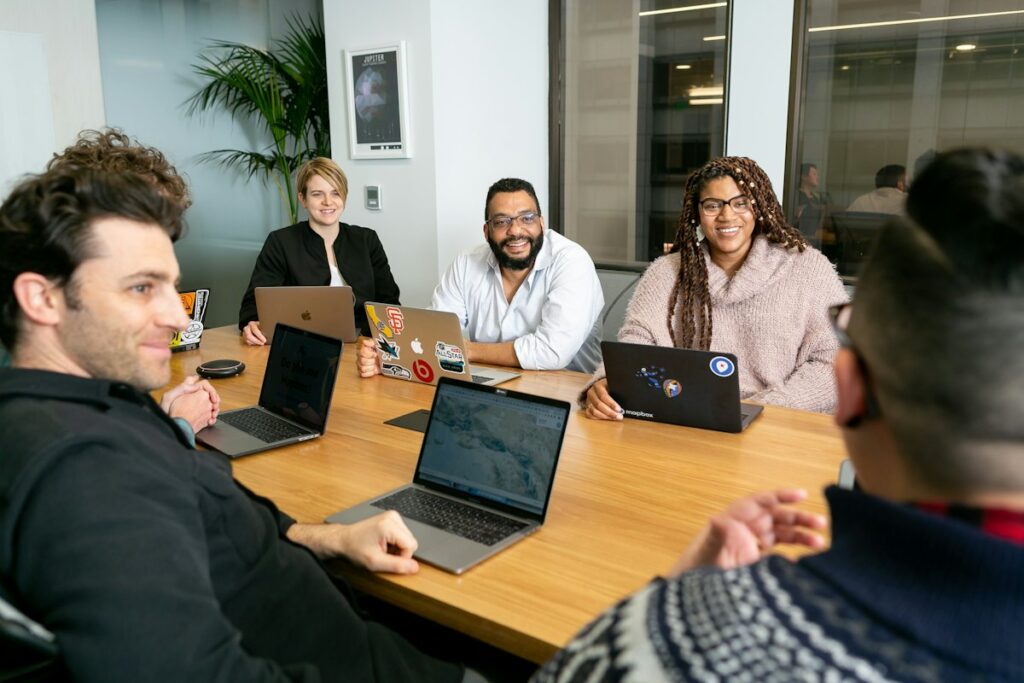
Photo: Unsplash
How the internet is changing British English
What is emerging as a major disruptive factor for (British) English today , as we speak , is the internet. The massive use of English on the internet is affecting the Albion language, leading to significant visible changes in the way that native speakers themselves have come to use their own language today. Namely:
1. A less formal register
In addition to the penetration into the neutral register, characteristic of speeches or newspaper/magazine articles, of informal terms such as "fave" (favourite), "pro" (a professional) or "celeb" (a celebrity), the use of contrasting verbal forms has increased ( aren't instead of are not , should've , and should not have ).
2. Fewer polite forms of address
In addition to the expansion of titles such as "bro", "dude", "man" or "girl", we have come to address each other directly using the first name or surname to which we no longer add Mr, Ms or Mrs, forms of address whose use has decreased, overall, by 33% in contemporary British English, according to the research cited below.
3. The vocabulary of "digital English"
The technological revolution has caused a veritable lexical tsunami in today's English vocabulary, which it has strikingly "digitized". Alexa, sync, app, vlog, to google, fitbit, iPad, LOL, OMG, to tweet, website – these are just a few originally "internautical" terms that are perfectly integrated into the everyday English of native speakers.
4. Modal verbs, increasingly rare
Must , may and especially shall have come to be perceived as obsolete and are becoming a kind of "endangered species", their use decreasing by approximately 41% in the case of must and may and by 61% in the case of shall . The authors of the research note that, if the trend continues at the same pace, these modal verbs will become very rarely used in the coming decades.
What's next for English?
So, since English remains one of the most widely used languages on the planet, largely through the internet, it is to be expected that its native speakers will continue to have surprises in terms of its evolution . It is certain that, given the dynamics of this extraordinarily prolific language, we will not get bored of it anytime soon!
For those who use English at work, the changes have a practical consequence: the right register matters as much as grammar. An email that is too formal sounds stiff, and one that is too informal can seem unprofessional to a new client. In the English courses for adults at International House Bucharest, the teacher focuses on conversation or writing, depending on your objectives, and for teams there are English courses for companies.
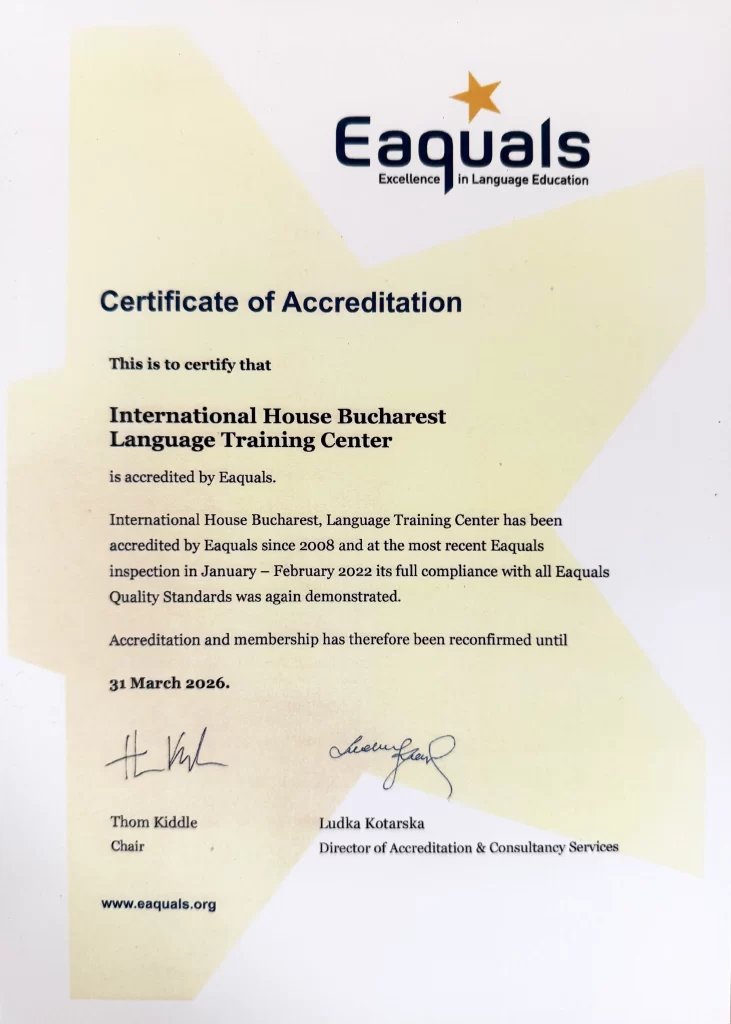
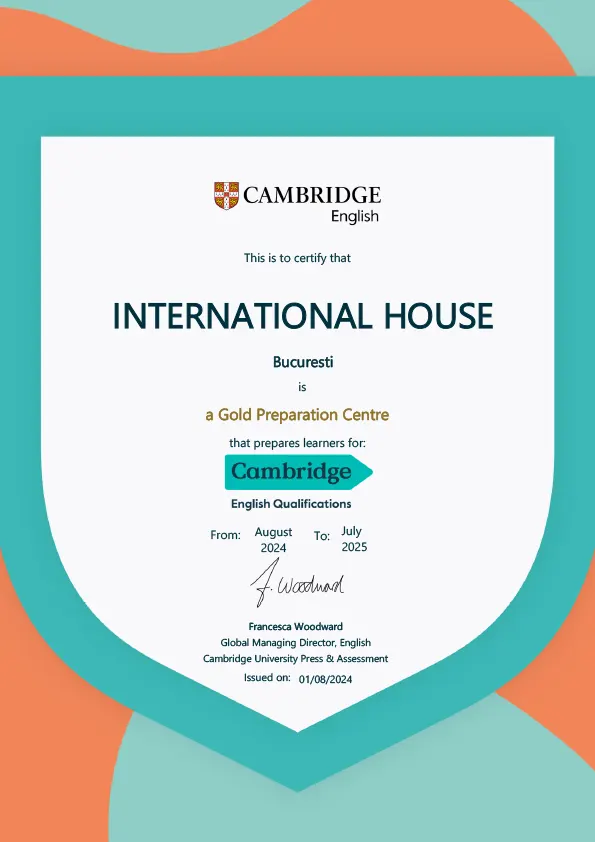
Quality guaranteed by global standards in foreign language teaching.
International House Bucharest is accredited by EAQUALS – Excellence in Language Education, part of the global network International House World Organisation and a Cambridge teacher training centre (CELTA & DELTA). We are ISO 9001 and ISO 27001 certified, ensuring quality, security and confidentiality in all our corporate programmes.
Manage consent
To provide the best experience, we use technologies such as cookies to store and/or access device information. Consent to these technologies allows us to process data such as browsing behavior or unique IDs on this site. If you do not give your consent or withdraw your given consent it may have negative effects on certain functionalities and functions.
function
Always active
Technical storage or access is strictly necessary for the legitimate purpose of enabling the use of a specific service explicitly requested by a subscriber or user or for the sole purpose of executing the transmission of a communication over an electronic communications network.
Preferences
Technical storage or access is necessary for the legitimate purpose of storing preferences that are not requested by the subscriber or user.
Statistics
Technical storage or access that is used exclusively for statistical purposes.Technical storage or access that is used exclusively for anonymous statistical purposes. Without a subpoena, voluntary compliance from your Internet Service Provider, or additional records from a third party, information stored or retrieved solely for this purpose cannot typically be used to identify you.
Marketing
Technical storage or access is necessary to create user profiles to which we send advertising or to track the user across one or more websites for similar marketing purposes.